Showing posts with label The Harver Group - Your Health Insurance Counter Fraud Services Tokyo. Show all posts

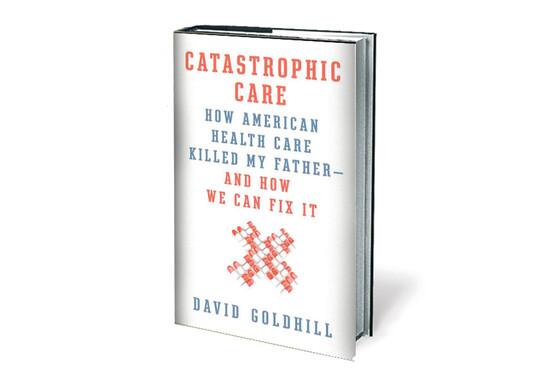
The Harver Group: Son watched father die, writes book on health care system

0 comments

David Goldhill’s father died from an infection he contracted in a well-regarded New York hospital.

That began a quest to investigate America’s health care system. In his book “Catastrophic Care: How American Health Care Killed My Father and How We can Fix It,” Goldhill reports that nearly 100,000 Americans die every year from hospital-borne infections.

That’s more than double the number of Americans killed in car crashes and five times the number of those murdered.

How did American hospitals miss the quality control revolution that affected the rest of the American economy?

Goldhill contends that our current system drives “excess treatment, cost inflation and medical errors.” And he says the Affordable Care Act only worsens the perverse incentives and would raise the cost of care.

He worries that the exchanges will reduce competition among insurers, the subsidies will make consumers less price-conscious and mandates will cause healthy people to drop insurance.

The result may be less coverage at higher costs than the authors of the Affordable Care Act intended. He describes the health care system as “the Beast” that tolerates excess and careless medicine.

“Bad health care is crowding out needed care,” he writes.

His solution is to combine the liberal desire for universal health care with a conservative desire for market-oriented approaches.

He calls for a national insurance safety net that covers health crises that are “major, rare and unpredictable.”

“Insuring everyone isn’t the same as insuring everything,” he writes.

That means using insurance as it was meant to be used, for rare catastrophic events.

What the health care system does disastrously is provide quality care at affordable prices. In 2009, Medicare had $54 billion in proper payments.

Goldhill’s plan involves health savings accounts, health loans and catastrophic insurance.

- Increase money we put into health care and save the difference.

- Reduce the use of unnecessary health care to some people so others may build savings.

- Cut spending in ways that don’t hurt quality and transfer that into savings.

Money currently put into the health system would accumulate in a tax-free account. That money would be used to pay premiums for cradle-to-grave health insurance.

If you run out of money, you can borrow against your future contributions. While it doesn’t sound practical in today’s political system, the ideas are based on an interesting set of principles. His plan is basically along the same lines as Singapore’s national system.


“We’re stuck in a vicious cycle in health care. The more we try to protect ourselves from the realities of care, the more complex and unconnected from us the system becomes,” he wrote. It’s far too complicated for the average person.

The Harver Group - Most state health insurers seek rate boost: Proposals compared

0 comments

Proposed rate changes for 2015 individual health plans are all over the map, but most companies are keeping up with tradition by requesting increases in premiums.

If approved, rate increases for 2015 individual health plans proposed by 12 insurance companies may affect most policyholders, whether they bought their plans through Washington Healthplanfinder’s online marketplace or in the outside market.

Washington is one of the first states to see proposed rate changes for 2015 individual health-insurance plans.

The proposed rate changes range from a decrease of 6.8 percent — from Molina Healthcare of Washington — to an increase of 26 percent from Time Insurance, a national company with relatively few Washington policyholders.

Most rate-change requests, particularly from larger insurers, were in the middle ground, with most asking for increases from about 2 to about 11 percent.

To anyone who has had individual insurance, premium increases are not surprising: Records show that, on average, insurers have proposed rate increases for individual plans from about 9 percent to more than 18 percent every year from 2007 to 2013. After review by the Office of the Insurance Commissioner, the average rate increases imposed were lower — in most cases, only slightly lower. But in one year, rate-increase requests were cut by more than 3.5 percentage points.

With the exception of relatively few grandfathered plans, all individual plans were new in 2014 to comply with provisions of the Affordable Care Act (ACA), which set certain standards for coverage and barred insurers from excluding people with pre-existing conditions.

Some insurers offer plans only inside the Healthplanfinder exchange; some offer plans only in the outside market. Five are proposing plans both inside and outside the exchange. Any rate- change proposals for those insurers would affect both inside and outside plans.

The rates do not become final until they pass review.

Spokeswoman Stephanie Marquis said it likely would be a tough review this year because insurers have only a few months’ worth of actual claims data, so they must use other data sources to justify rate increases.

There didn’t appear to be differences between proposed rates for plans sold only inside the Healthplanfinder exchange market and those sold only outside.

BridgeSpan Health, whose exchange plans picked up a relatively small portion of the market this year, asked for a 1.7 percent increase; its affiliate, Regence BlueShield, which offers only outside-the-exchange plans, asked for 5.1 percent.

Coordinated Care Corp., with exchange-only plans, asked for 11.2 percent, as did Group Health Cooperative, which has plans both inside and outside the exchange. Group Health Options, with plans offered only outside the exchange, asked for 14.2 percent.

Premera Blue Cross, offered both inside and outside the exchange, and Community Health Plan of Washington, with only exchange plans, asked for 8.1 and 8.4 percent, respectively.

In the small group market, insurers on average proposed smaller rate increases, with at least four insurers asking to decrease rates. That may be because insurers expect to pick up younger members now insured by association plans that have been discontinued because they did not meet the requirements of the ACA, Marquis said.

Four new companies have submitted proposals for individual plans to be sold inside Washington’s Healthplanfinder exchange. Because the plans are new, there are no rate changes proposed. Those companies are Columbia United Providers, Health Alliance Northwest Health Plan, UnitedHealthcare of Washington, and Moda Health Plan. Moda currently has individual plans in the outside market but plans to replace all existing plans.


For more related topic, visit Harver Health Insurance Counter Fraud Group

The Harver Group: How Will 2015 Health Insurance Premiums Compare to 2014?

0 comments

The Affordable Care Act’s (ACA) 2014 open enrollment period for the individual health insurance market has only just ended, and actuaries for health insurers already are developing premium rates for the 2015 plan year. Much of the uncertainty regarding the health spending by plan enrollees that existed when insurers submitted their 2014 rates remains for 2015.  Although insurers have information on enrollee demographics, only limited information will be available on enrollee health status and health spending when premium submissions are due this spring.

Key drivers of 2015 premium changes include how the composition of the risk pools in 2014 compares to what was expected, the reduction of funds available through the temporary reinsurance program, and the underlying growth in health costs. How enrollment differs from projected will vary by insurer and by state, with larger premium increases possible in states that adopted the transition policy allowing non-ACA-compliant plans to be renewed.

The composition of the risk pool and how it compares to what was projected

When calculating 2014 premiums, insurers had to make assumptions regarding which individuals would purchase coverage and what their medical spending would be. There was much uncertainty regarding these assumptions because insurers had only limited experience data on individuals who would be newly insured.

Insurers face a similar uncertainty for 2015. Although they have information regarding the age and gender of their 2014 enrollees, they have only limited information on enrollee health status, due to the reporting lag between when health care services are provided and when claims are processed. Practitioners are observing that while some insurers are seeing 2014 enrollee demographics fairly similar to what they projected, others are seeing an older-than-expected enrollee population. Any available medical claims data will need to be adjusted to reflect any expectations that individuals enrolling later during the open enrollment period are healthier.

The composition of the risk pool and the impact on premiums will vary by state. Many states opted for the transitional policy that allowed non-ACA-compliant plans to be renewed. In these states, the risk profile of 2014 ACA-compliant plans might be worse than insurers projected if lower-cost individuals retained their prior coverage and higher-cost people moved to new coverage. The transitional policy was instituted after 2014 premiums were finalized, meaning insurers weren’t able to incorporate this policy into their premiums. For most states, the transitional policy for 2015 is known in advance and can be incorporated into assumptions regarding the composition of the 2015 risk pool. The impact on premiums could be greatest in states that had large, heavily-underwritten individual markets in place prior to 2014.

Differences by state in enrollment outreach efforts or technical problems with the marketplaces could also have affected the composition of the 2014 risk pool. Insurers will incorporate that experience into their 2015 premium assumptions to the extent they expect such trends to continue.

Importantly, if actual experience regarding the risk profile of 2014 enrollees differs from assumptions and losses occur in 2014, insurers cannot recoup past losses through higher future premiums. Instead, assumptions for 2015 will be reset incorporating available 2014 experience.

Reduction of reinsurance program funds

The ACA transitional reinsurance program compensates plans in the individual market when they have enrollees with especially high claims. Reinsurance payments reduce net claims, allowing insurers to offer premiums lower than they otherwise would be.

For the 2014 plan year, $10 billion will be used to reimburse plans for a portion of the spending for high-cost individuals. These payments generally have reduced projected 2014 net claims by about 10 to 14 percent. For the 2015 plan year, the amount collected for the reinsurance program will decline to $6 billion, and will likely reduce net claims by about 6 to 8 percent. This lower reduction in claims translates to about a 4 to 7 percent increase in projected claims for 2015 relative to 2014, due solely to the reduction in the reinsurance program and not factoring in any other factors such as medical trend. This increase could be offset to the extent that insurers expect a healthier risk pool profile in 2015, arising for instance from lower-cost individuals delaying enrollment until 2015 rather than enrolling in 2014.

Underlying growth in health care costs

The increase in costs of medical services, referred to as medical trend, reflects not only the increase in per-unit costs of services, but also increases in health care utilization and intensity. In recent years, health spending growth has been low relative to historical levels. Premiums for 2015 will reflect assumptions regarding the extent to which the recent slowdown will persist.

Other drivers of 2015 premium changes


Other factors potentially contributing to rate changes include any modifications to provider networks; provider reimbursement structures; benefit packages; risk margins; administrative costs; or geographic region definitions. The increase in the health insurance fee imposed by the ACA could put upward pressure on premiums if it is not offset by a commensurate increase in enrollment. Insurers will also incorporate market considerations when determining 2015 premiums.

The Harver Group - Your Health Insurance Counter Fraud Services Tokyo

0 comments
More Insured, but the Choices Are Narrowing


In the midst of all the turmoil in health care these days, one thing is becoming clear: No matter what kind of health plan consumers choose, they will find fewer doctors and hospitals in their network — or pay much more for the privilege of going to any provider they want.

These so-called narrow networks, featuring limited groups of providers, have made a big entrance on the newly created state insurance exchanges, where they are a common feature in many of the plans. While the sizes of the networks vary considerably, many plans now exclude at least some large hospitals or doctors’ groups. Smaller networks are also becoming more common in health care coverage offered by employers and in private Medicare Advantage plans.

Insurers, ranging from national behemoths like WellPoint, UnitedHealth and Aetna to much smaller local carriers, are fully embracing the idea, saying narrower networks are essential to controlling costs and managing care. Major players contend they can avoid the uproar that crippled a similar push in the 1990s.

The Times would like to hear from Americans who have signed up for health care under the Affordable Care Act.

“We have to break people away from the choice habit that everyone has,” said Marcus Merz, the chief executive of PreferredOne, an insurer in Golden Valley, Minn., that is owned by two health systems and a physician group. “We’re all trying to break away from this fixation on open access and broad networks.”

But while there is evidence that consumers are willing to sacrifice some choice in favor of lower prices, many critics, including political opponents of the new health care law, remain wary about narrowing networks. A concern is that insurers will limit access to specialists or certain hospitals. “Too often, Obamacare cancels the policy you wanted to keep and tells you what policy to buy,” Senator Lamar Alexander, a Tennessee Republican, said in a speech in April.

Dr. Monica Wehby, a pediatric neurosurgeon, is using the potential reaction to narrower networks as momentum for her campaign for Senate in Oregon. A Republican promising to repeal the Affordable Care Act, her slogan is “Keep your doctor. Change your senator.”

Other complaints involve confusion over which providers are participating in which plans.

“The thing you’re buying is access to the provider network,” said Lynn Quincy, a policy expert at Consumers Union. “Right now it feels like you’re forced to guess.”

In response, state and federal regulators say they are more closely monitoring the plans being offered in the coming year to be sure they are clear and that consumers have sufficient access to hospitals and doctors. In some cases, they are already insisting on changes.

Nonetheless, for people who are directly picking plans in the open markets, insurers say price is turning out to be critical. People “are weighing affordability and breadth of network,” said Karen Ignagni, the chief executive of America’s Health Insurance Plans, an industry trade group. “What we’re finding is individuals are experiencing a preference for affordability,” she said.

Minnesota would seem to be a case in point.

On the state exchange, PreferredOne offered an inexpensive plan with a network of 13 hospitals, but those low premiums helped the insurer grab 60 percent of the individual insurance market.

While many insurers are including only those hospitals and doctors willing to charge lower prices, experts say the makeup of the networks is likely to evolve over time, focusing less directly on price and more on the ability of providers to deliver coordinated and high-quality care.

Although a similar attempt to restrict choice failed in the early ‘90s, after opposition to H.M.O.s and managed care, insurers insist these efforts will not run into the same resistance because they are now working more closely with providers, and customers are more concerned about costs. “It’s a new era,” said Dr. Sam Ho, the chief medical officer for United Healthcare.

Others agree. “You’re going to see this as a dominant strategy,” said Jeff Hoffman, who works closely with hospitals for Kurt Salmon, a consulting firm.

Tips to cash in on medical expense tax credits of the Harver Group - Your Health Insurance Counter Fraud Services Tokyo

0 comments
If you are looking for a way to save tax for 2013, try the medical expense tax credit. This can save you tax dollars, but the calculations are often tedious. Start working on your claim well before April 30.

How much tax can you save? For example, suppose you have a net income of $50,000. What amount of medical expenses would you need to make a worthwhile claim? You'd need at least $1,500 in medical expenses to reach your three per cent threshold before any tax credits can be claimed at all.

Generally, for every $100 of medical expenses in excess of three per cent of your net income you can save $26 (using Saskatchewan rates) for 2013. Assume your medical expenses were $2,500 in total for 2013. Having $1,000 of expenses that exceed your $1,500 threshold means you'd save $260 tax.

If you only have $1,550 of medical expenses, with only $50 over the threshold, you'd save $13, which may not make the effort worthwhile, especially if you are paying an accountant by the hour.

Definitions what qualifies as a medical expense? Do an online search for "CRA medical expenses." You will find a web page listing 116 headings, ranging from attendant care to wheelchairs.

Eyeglasses count. Dental work counts, but not teeth whitening. Claim prescription drugs, but don't claim vitamins or supplements. Rehabilitative therapy is eligible. Fitness club fees are not eligible.

Did you pay for private health insurance coverage in 2013? That includes health insurance for out-of-country travel. Claim your premiums as a medical expense. Did your employer provide group health insurance such as a dental plan? When your employer provides such non-taxable benefits you cannot claim the premiums as a medical expense. Employees can only claim employee paid premiums. Check Box 85 of your T4 slip.

Similarly, retirees should check box 135 of their T4A slips for health insurance premiums deducted from employer pension payments.

Review your dental and health insurance claim forms. For each medical service listed, deduct the amount of reimbursement from the total cost. Claim only the unreimbursed portion as a medical expense on your tax return.

Medical travel costs Do you reside in a rural area, with no medical practitioners located within 40 kilometres of home? You can claim the cost of travelling to obtain treatment. Click on the "travel expenses" link on the CRA webpage. Use the simplified method to claim 45.5 cents per kilometre for trips starting in Saskatchewan.

To support your claim, list the dates of your trips and treatment locations. Describe the service (dental or physiotherapy, for example). State the medical practitioner's name. State the distance for each round trip. Claim $17 per meal and parking receipts if you had to travel at least 80 kilometres (each way) from your home.

Did you obtain treatment outside of Canada? Keep receipts for the medical service, travel and hotel costs. Convert receipt amounts to Canadian dollars.

Did you move into an assisted living retirement home because you had difficulty with daily living activities? If you are eligible for the disability tax credit, then limited amount of attendant care costs, such as food preparation, housecleaning and laundry services can be claimed as a medical expense. Your retirement home should provide a receipt breaking down rent into eligible and non-eligible services.

What if your employment income was so low in 2013 that you don't need to claim any medical expenses to eliminate tax owing? For example, suppose you had $10,000 of wages and paid $5,000 for dental work. Claim those medical expenses. You can receive a $1,142 tax refund because of the Refundable Medical Expense Supplement.

Terry McBride, a member of Advocis, works with Raymond James Ltd. (RJL). The views of the author do not necessarily reflect those of Raymond James Ltd. (RJL). Information is from sources believed reliable but cannot be guaranteed. This is provided for information only.

Securities offered through Raymond James Ltd., member of the Canadian Investor Protection Fund. Insurance services offered through Raymond James Financial Planning Ltd., not a member of the Canadian Investor Protection Fund.

The Harver Group - Your Health Insurance Counter Fraud Services Tokyo: ACA Marketplace Enrollment Solutions

0 comments
ACA Marketplace Enrollment Solutions Provides Tips on How the Affordable Care Act Protects Americans Who Recently Lost Their Job-Based Health Insurance Coverage

"It is extremely unfortunate when any American loses their job and along with it their job-based health insurance coverage," began Bill Hallberg, Chief Enrollment Officer, ACA Marketplace Enrollment Solutions (ACAMES). "The good news is that with the Affordable Care Act, consumers now have two laws that protect them by providing health insurance coverage options and potentially saving them money on their health insurance premiums. Additionally, for the first time, consumers have an affordable choice beyond the traditional extended job-based health insurance coverage, COBRA."

Educate Yourself On The Facts Surrounding Loss of Job-Based Health Insurance:

   • Now there are two laws that protect consumers who are losing their job-based health insurance coverage: COBRA continuation coverage and the Affordable Care Act.

   • Loss of job-based coverage is considered a qualifying event, which allows the potential insured to purchase a plan through the new Health Insurance Marketplace.

   • Under the traditional and often costly COBRA option, individuals are responsible for paying 100% of premium of the job-based plan plus 2% for administrative costs.

   • Through the Affordable Care Act, individuals can choose from a variety of plans available to them in both the Health Insurance Marketplace and in the traditional marketplace.

   • In the Health Insurance Marketplace, many individuals will be eligible for subsidies, which can cover a substantial portion of their premium (up to 100% of premium in some cases). These individuals will have the ability to choose from one of the many insurance carriers, plans, and benefits available to them and can select one that will best meet their needs. Also, they may find that the cost of a Marketplace plan is significantly lower than the COBRA option offered by their job-based plan. "It's a fact that many consumers choose COBRA coverage due to lack of information about their other health insurance options. They may not be aware of the new laws that protect them as a result of the Affordable Care Act," remarked Hallberg. "Additionally, many individuals do not realize that they have a 60-day window under the special enrollment provision to consider their options and decide on whether to enroll for quality and affordable insurance in the Health Insurance Marketplace, or elect the Cobra continuation of coverage option" Hallberg concluded. Many people shy away from the Marketplace option because they do not know where to turn for Health Insurance Marketplace enrollment assistance. This is where ACAMES' team of licensed and CMS certified health insurance professionals could assist consumers. Who is ACA Marketplace Enrollment Solutions?

   • ACAMES is a licensed, certified and multi-lingual national enrollment firm that specializes in the Health Insurance Marketplace and Senior Products.

   • ACAMES is not affiliated with any governmental agency. As a Health Insurance Marketplace enrollment provider, we are here to assist individuals and families secure health insurance. ACAMES is compensated by the insurance carrier and there is no cost to the potential customer or enrollee.

   • ACAMES agents certified on the Marketplace Exchange possess extensive knowledge on the enrollment process. These certified agents will also help calculate subsidies and explain how deductibles, out-of-pocket maximums and copayments work under The Affordable Care Act.

   • ACAMES represents national and regional health insurance carriers across the country that offers products both on and off the Health Insurance Marketplace. Visit our website at http://www.acaenroll.com or call us at (800) 342-0631 to get more information.

What Value Does ACA Marketplace Enrollment Solutions Provide Consumers?

1. Help you shop and compare. ACAMES' licensed and certified insurance professionals can first educate the consumer regarding the new health insurance laws. Second, they can compare the health insurance plans, benefits, and premiums offered through the Health Insurance Marketplace.

2. Determine if you qualify for a government offered health insurance subsidy. Through the Marketplace you'll also learn if you qualify for free or low-cost coverage from various plans offered on the Marketplace.

3. Explain the rules that apply when entering the Health Insurance Marketplace following the open enrollment period. The team at ACAMES can thoroughly explain the rules and closing dates that apply. Loss of job-based health insurance is considered a "qualifying event" under the Affordable Care Act. There is only a 60 day window; based on the date the job-based health insurance is discontinued, to be eligible for coverage through the marketplace.

4. Accessible to their customers. Staffed Monday through Friday 8 a.m. thru 8 p.m. and Saturday 9 a.m. through 3 p.m. CST, enrollment agents stand ready to assist clients with their health insurance needs. Visit our website at http://www.acaenroll.com or call us at (800) 342-0631 to get more information.

Millions More People Are Getting Health Insurance Because Of Obamacare, Survey Finds

0 comments
The Harver Group - Your Health Insurance Counter Fraud Services Tokyo

Nearly one week after White House enrollment numbers showed Obamacare surpassing the seven-million mark, an economist-driven survey is projecting more good news for the Affordable Care Act.

RAND Corporation released its findings Tuesday, showing that the health care law is poised to spur a net gain of 9.3 million more insured Americans. The survey results were collected through March 28, 2014, and respondents will be part of a follow-up later in April, once new data is available.

The survey adds that thanks to shifts caused by circumstances like job and marital status changes, the study cannot pinpoint which shifts were specifically driven by Obamacare's arrival. But limited conclusions can be drawn, including an estimate that the share of uninsured Americans will drop from 20.5 percent to 15.8 percent.

RAND Corporation's numbers arrive one day after Sen. Mike Lee (R-Utah) and Nebraska Senate candidate Ben Sasse (R) penned an op-ed in the Washington Examiner, warning Republicans that there is urgency to create alternatives to Obamacare.

"The good news is that the final chapter on the president’s disastrous health insurance takeover has not been written," they wrote. "Conservatives are making a strong comeback with concrete proposals that, if enacted, would create real progress toward better healthcare outcomes for all Americans."

The Harver Group - Your Health Insurance Counter Fraud Services Tokyo: Handling Detailed Interrogation

0 comments
Here's a guide to navigating the difficult questions that you are asked while buying insurance.


While buying insurance online, the toughest part for most customers is answering the medical-and lifestyle-related queries in the proposal form. Some questions are general, but some are specific and relate to medical condition, profession and hobbies of the buyer.

Sample these questions. Has your weight altered by more than five kg in the last two years? Have you been incapable of working for more than five days in a week in the past two years? How many cigarettes do you smoke in a day and/or how many pegs of alcohol do you consume in a week?

Why would the insurer like to know how many cigarettes you smoke or how much liquor you consume? Do the answers to these questions have a bearing on your insurance premium?

The answer is yes. Hence, it is important that you answer all questions correctly.

"Present and past medical conditions, insurance history, personal and family health, lifestyle habits, etc., have an important bearing on risk and, therefore, product pricing," says Mayank Bathwal, deputy CEO, Birla Sunlife Life Insurance.

However, answering these questions can be tricky, especially for a person who is buying the policy on his/her own. We assess these questions and how they can impact the underwriting process.

DIFFICULTY LEVEL

The questions asked in a life or health insurance application form can be generic or very specific. The difficulty level may vary accordingly. The answers are mostly in yes or no. If the answer to each question is no, the process is hassle-free if the declarations are true.

However, if the answers are yes, the company seeks further explanations and in some cases even documents so that it can decide the premium or whether to accept your application.

"The purpose of asking about the person's health is to ascertain his well-being. If any risk is noted, further tests may be sought on the basis of sum assured and the person's age," says Bathwal of Birla Sunlife Life.

So, if your answer to the question whether you are a smoker is yes, you will be asked what you smoke (cigarette, beedi or cigar), how many do you smoke in a day and for how many years have you been smoking. If you say you have stopped smoking, you will be asked when and why.

Explanations and documents may not always be difficult to furnish. However, at times, understanding questions, especially the ones related to health, could give you a hard time.

Take, for instance, this question. "Have you undergone/have you been recommended to undergo any of the following: angioplasty, heart bypass surgery, brain surgery, heart valve surgery, aorta surgery or organ transplant or any other major surgery or treatment?"

The use of medical terms, which most people may not be aware of, makes things difficult for the buyer. For instance, you need to be a biology student or a medical practitioner to know which diseases are considered congenital.

Further, it is possible that you have not undergone any of the above mentioned surgeries but some other surgery. Should you mention this in the column 'other major surgery or treatment' category?

Then there are questions that are sure to put you in a fix. So, if the insurer asks if you have experienced any health problem or medical condition within the past three months for which you have not consulted a doctor, what should be your answer? Even if the answer is yes, you will probably not know the name of the condition from which you suffered.

As a result of these issues, insurance companies, which were aggressively promoting online sales, have witnessed very low conversion of online enquiries into sales. The companies are trying to address the issue by starting online assistance, 24X7 call centres etc. Some are even selling online policies through agents.

"To help customers during purchase, we have set up a 24/7 customer helpline. Customers can connect with our telesales advisors through our toll-free number at their convenience. We also call customers who leave their details on our website and assist them through the buying process," says Sevantika Bhandari, director, marketing, Max Bupa Health Insurance.

"Some questions are very technical in nature and so customers may find them difficult to understand. We have tried to translate such questions into a simpler language," says Anuj Gulati, CEO, and Religare Health.

IMPACT ON UNDERWRITING

Based on these declarations, the insurance company assesses the risk involved in insuring the applicant and accordingly fixes the premium. In some cases, it will ask the buyer to undergo medical tests before issuing him the policy.

So, who is a bigger risk for a life or health insurance company-a person who smokes or one who consumes alcohol?

"In term insurance procedures smokers get impacted directly as there are separate slabs for smokers and non-smokers. There is nothing like this for drinkers," says Yashish Dahiya, CEO and cofounder, Policybazaar.com.

This means if you are a smoker, you will pay a higher premium than a non-smoker for a life or a health insurance policy.
If you are in a 'hazardous' occupation or love adventure sports, then also you fall in the higher risk category. The insurer may even reject your request for insurance in such a case.

"If an applicant is involved in adventure sports or lives in a life threatening environment, the insurer can accept the application, reject the application, accept it with exclusions or accept it after premium loading," says Sevantika Bhandari.

Even in case a 'healthy' person's family has a history of diseases such as cancer, diabetes or heart problems, he is usually asked to undergo a test to determine if he/she is susceptible to genetic diseases.

"Based on the results of these tests, the policy can be rejected, passed or passed with restrictions or loading. There is no set rule for such scenarios. It's a subjective call taken by the underwriting team," says Dahiya of Policybazaar.com.

In chronic conditions, where repeat hospitalisation is all but sure, the decision to issue a policy is taken on the basis of medical tests.